
AI in Singapore Primary Schools Explained: What Parents Need to Know from ST Education Forum 2026
At the 2026 Straits Times Education Forum, one of the key announcements from Education Minister Desmond Lee was that Artificial Intelligence (AI) will be formally introduced into the primary school curriculum from Primary 4 onwards.
For many parents, this immediately raises questions: What does this mean for my child? Will AI replace learning? Is it safe? Is it too early?
The short answer is: AI is not replacing learning — it is being introduced carefully as a guided learning tool to strengthen how students think.
Here’s a simple breakdown of what was shared and what it actually means in practice.
AI in Primary Schools: Introduced with Structure and Supervision
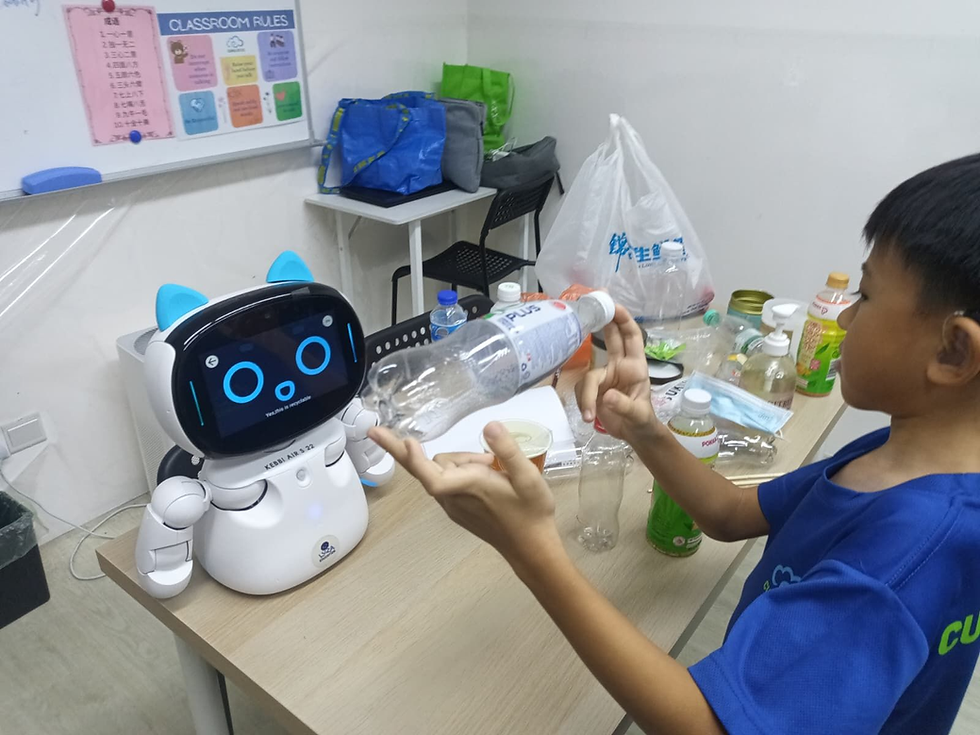
From Primary 4 onwards, students in Singapore will begin interacting with AI tools in a structured and supervised way.
This is not open-ended or unrestricted use. The tools used in schools are not general public AI tools, but purpose-built systems developed for education under the Ministry of Education (MOE). This ensures that students are learning in a safe, controlled, and age-appropriate environment.
The key idea is not to let AI “do the thinking” for students, but to guide them in how to think better.
AI as a Thinking Guide, Not an Answer Machine
A major focus shared at the forum is how AI will be used as a pedagogical tool. In simple terms, this means:
AI will not directly give final answers
Instead, it will prompt students to think, reflect, and explore solutions
It acts more like a guided assistant rather than a shortcut
For example, instead of saying “this is the answer,” the AI may ask:
“What do you think comes next?”
“Can you explain your reasoning?”
“Have you considered another approach?”
This helps students build deeper understanding instead of relying on instant answers.

Learning “About”, “With”, and “Beyond” AI
The MOE framework shared at the forum highlights four stages of AI learning:
Learning about AI: Understanding what AI is and how it works
Learning with AI: Using AI tools to support learning tasks
Learning through AI: Developing thinking skills with AI guidance
Learning beyond AI: Applying knowledge independently without reliance on tools
This progression is important because it ensures students do not just become users of AI, but develop the ability to think critically about it.
What This Means for Parents
In practical terms, parents can think of this shift as:
AI is being used to support learning, not replace teaching
Students will still be tested on thinking, understanding, and reasoning
The focus remains strongly on foundational skills
Exposure to AI will be gradual, structured, and supervised
This is not about students using AI freely at home or in open environments. It is about guided exposure within the classroom to build awareness, strengthen thinking skills, and help students understand how to use AI appropriately as a support tool in their studies, rather than relying on it for answers.

The introduction of AI into primary education is not about changing what students learn, but enhancing how they learn. From Primary 4 onwards, it is being introduced in a structured way to strengthen thinking and understanding, not replace it.
For parents, this means reassurance that traditional learning remains the foundation of education. AI is simply being added as a carefully guided tool — one that encourages students to think more deeply, question more meaningfully, and build confidence in their own reasoning, rather than depending on instant answers.
To give your child a head start in this evolving learning landscape, sign up for LYZA Education classes today!


Comments