
From Coding to Critical Thinking: How Lyza Education Educators Adapt to the AI Era
"AI is moving fast. But education must move smarter."
10 years ago, we learnt a lot about syntax. Today, we teach adaptability. We sat down with five educators from Lyza Education to discuss what has fundamentally shifted in the classrooms, and how they prepare students for jobs that funnily enough, have yet to exist yet.
Evan, Curriculum and Technology Lead
Evan, as someone who designs Lyza’s curriculum, what is the new core skill students actually need to learn?

The core skill students need today is not about memorising facts or mastering every programming language, it is learning how to critically vet AI-generated solutions instead of copying them blindly.
While computational thinking and foundational tech skills remain transferable, the real differentiator is the willingness to keep learning. That’s why Lyza’s curriculum does not ban AI; it coaches students to interrogate it, preparing them to use AI as a tool rather than be replaced by it.
Zaid, Coding Educator
Zaid, back in 2016, a student getting stuck on a bug meant raising their hand for help. Now they can ask ChatGPT. What new skill do you teach instead?

The new skill is not debugging syntax, AI can handle that. Instead, we teach students to move from frustration over misplaced characters to high-level problem-solving and creative exploration.
By using AI to translate complex concepts into relatable examples (like loops through song rhythms or if‑else through playground games), our role as an educator shifts from being syntax debuggers to creative architects.
This lowers the entry floor, making coding more inclusive, and ensures a great idea isn’t silenced by a small error, it is now given the tools to come to life.
Grace, STEM and Coding Educator
Grace, you teach both STEM and coding. How has the definition of 'problem-solving' changed compared to yourself as a student 10 years ago?
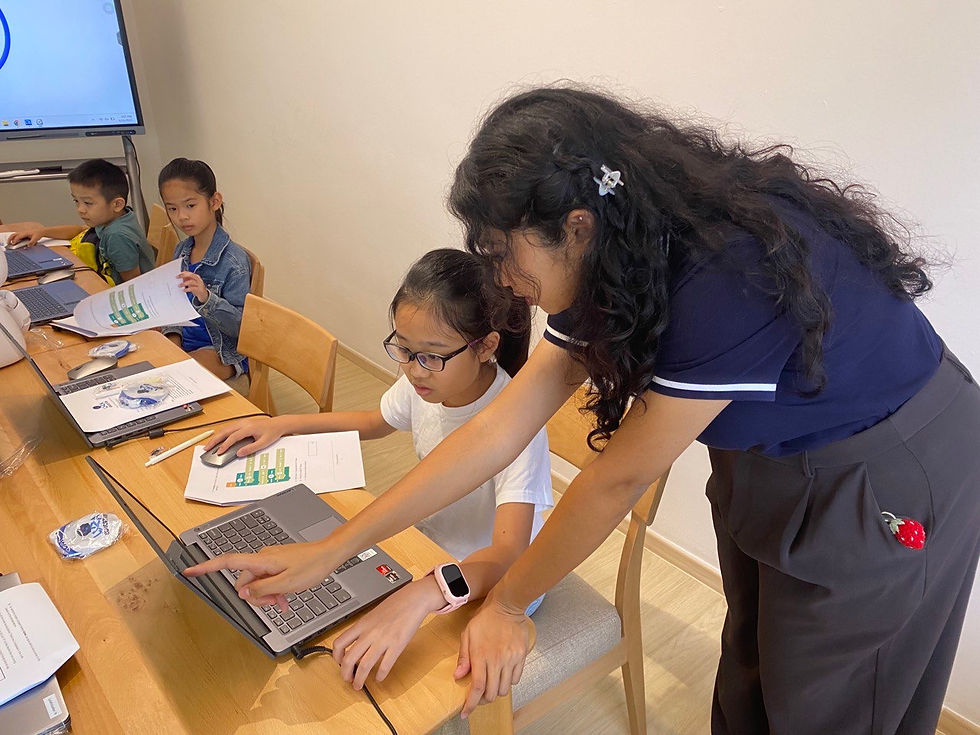
Students now are more explorative and have more creative ways to solve problems. They are able to plan out the solution by looking at the big picture, then breaking down the parts into smaller steps and joining it together, instead of getting overwhelmed and confused.
Fairus, Coding Educator
What is the single biggest 'myth' about AI and learning that parents still believe, and what is the reality in your classroom?

Many parents think that their child is too young for AI, and AI is only important when they are in tertiary education.
The reality is that actually AI is now everywhere! In fact, we teach students as young as 7. While they are not learning the advanced knowledge and "creating" AI, we impart them knowledge on relevant modern-world skills, such as Generative AI, smart devices, and how to utilise these skills in a safe, ethical manner.
Your child will not compete against AI. They will compete against their peers on who has learned to use AI better. At Lyza Education, we do not find a need ban ChatGPT or other AI tools, we teach students to master and out-think it.
Keen to learn more? Join us for a trial lesson to know more about the Lyza experience.


Comments